Being On The Computer™ is not fun anymore
I don’t tend to talk a lot about my personal life here. I leave that for other platforms, but this time I feel like it’s necessary.
Before getting to the thing I want to say, I need to go back a few years.
Going down memory lane
It’s February 2020, I am in my fourth year of university, and the world is being taken over by COVID. Some of my classmates who were studying abroad in Italy for the year are jumping on planes to come back to Spain. The entire thing seems surreal, mainly because of the exponential pace at which things seem to be changing. One day it’s a news item, a virus that is making people sick over in China. A few weeks later it’s in Europe and your Italian neighbours seem to be overreacting. Suddenly, the Spanish government announces that everybody needs to stay home for the foreseeable near future, with very few exceptions. So one day you’re having lunch with some friends at the uni cafeteria and the next day you’re saying goodbye to them and talking about cancelling gym memberships because it’s not worth paying for a month (ha!) when you’re not actually going to go. You are unaware that you won’t see each other for the next six months.
The Spanish government’s response to COVID was one of the most restrictive in all of Europe. No one could leave home except for those with essential occupations (and only then to go to work). Police officers were suddenly emboldened by a sense of self-importance that often meant getting interrogated mid-grocery-run about whether or not baking soda was something worth getting infected over. In my case, I was also going through a break-up.
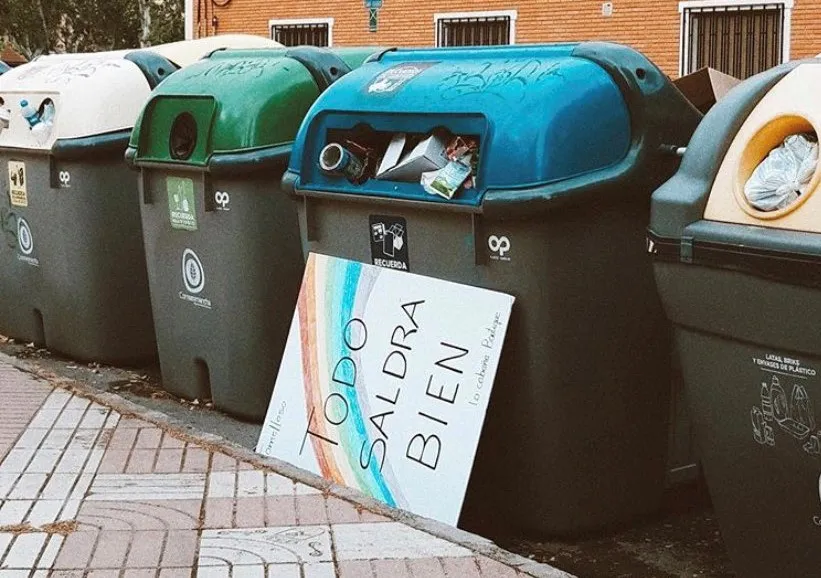
I was in desperate need of something to do. I attended online classes, solved the same problem sheets I would’ve been solving had COVID not existed, and turned in the same papers some professors had planned months beforehand. Life was maddening, and the increasing death count was the number everyone kept talking about.
A few months prior to all this, I had decided to take Computational Physics. It wasn’t the typical physics class. There was no exam as such, but instead you were graded on two (very thorough) papers. You learned techniques for writing working physical simulations in C++ or Fortran, and also got ssh access to the cluster at my university. (I was surprised to learn that what I thought was the broom closet was actually a 90-teraflop supercomputer.)
This was exciting. This was something you could spend hours doing. Thinking a bit, taking lots of notes, writing code, coming up with makeshift plots to see whether there were any real improvements in your results. Talking with classmates who were stuck trying to do the same thing. Seeing the rubber back of my 2010 MacBook peel off after overheating day after day. Setting up toy simulations before the grand finale and running your code on the big computer. After two months without touching grass, I started going a bit mad and started thinking it was kind of romantic that even if I wasn’t in Granada with my friends, at least some megabytes in that broom closet came from my work. In some sense, I could still feel somewhat attached to the city where I wanted to be.
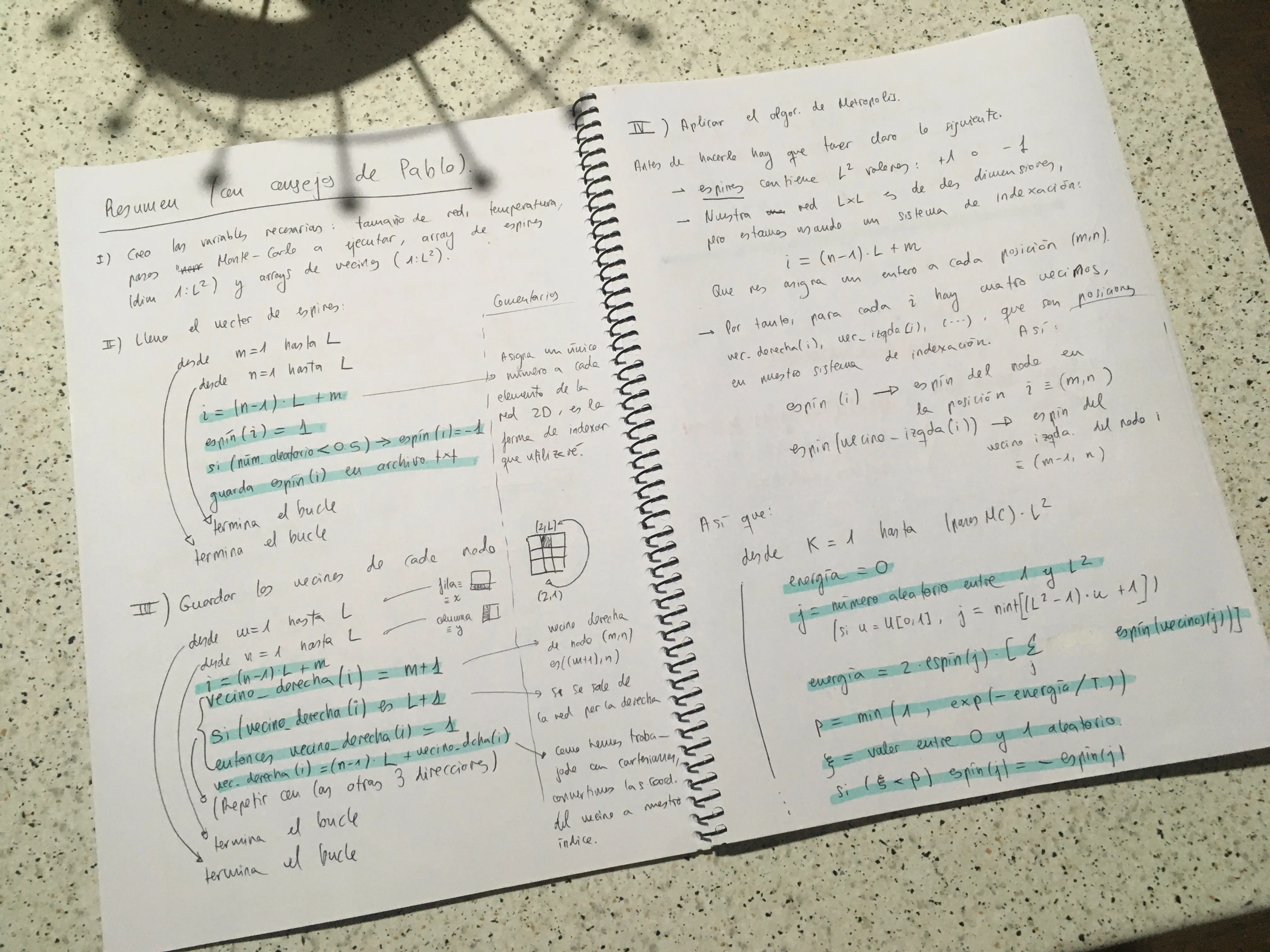
We are now used to people claiming to be “AI engineers”, which can mean anything from “I have been academically researching frontier topics for the past decade” to “I have the brainpower to tell Claude an approximation of what I want to get done”. For those in the second group, or even those who have previously typed import torch by hand, it can be tempting to delude themselves into thinking that they are actually knowledgeable about AI, deep learning and whatever goes on under the hood. This is different to how things used to be. For example, this class was hard, not because the results were impressive (they weren’t, by any standard), but because you needed to do everything from scratch. Fortran does not play around: you work close to the metal and you need to tell the processor how much memory to allocate for each variable, the exact types you are using. Unless you used libraries, there weren’t even native functions for very basic mathematical operations.
In summary, you needed to understand what you were doing, and you constantly encountered roadblocks. This was the case for anyone programming anything remotely complex, of course. The thing that almost drove me insane for an afternoon was that, in a gravity-related simulation, bodies on my screen stuck to each other after collisions instead of bouncing back. Imposing the physical conditions alone was not working due to some complexities introduced by time quantization. Because the objects in my simulation were just 2D balls, I googled “sticky balls simulation” to my eternal dismay. I eventually found the answer in a 2005 forum post written by a Japanese man. The relief, oh my god. I ended up passing with honours. Thanks, unknown Japanese man.
Even if this was often frustrating, it was something good to be doing. It was challenging, but you learned and made yourself into the type of person who can solve problems and think about challenges. It made you put your frightened-monkey brain aside and overcome the immense barrier of having to think slowly about stuff.
Flash forward to the Big 2026
Programming, as a discipline, has changed seemingly forever. Or at least until the AI bubble bursts and drags the entire world economy down, which does not seem like a remote possibility anymore. (It is rather terrifying to think that Ajinomoto, a company famous for producing a flavour enhancer, has more than doubled its share price since 2023, partly because of its semiconductor-materials side hustle supplying the AI infrastructure boom.)
I know there are good things about this. One could argue that producing code was the main barrier to, well… producing software, up until a few years ago. Now anyone can write code—which means no one actually writes code because 99% of the writing is left up to these matrix-multiplying black boxes. That’s not inherently bad, since a lot of people who were not technical are now able to produce at least some form of service or use existing infrastructure, even if it’s for their personal use. Fixing some silly thing on your page is no longer a matter of hours, producing a Dockerfile doesn’t make you foam at the mouth, and a lot of trivial tasks have stopped being the hassle they once were.
But being on the computer is not fun anymore.
I mean something very specific by this. I am not gatekeeping coding, since, as of this writing, I am not even a software engineer in the true sense of the term. What I mean is that spending time solving something used to be somewhat fun, and you could learn a thing or two. There was no shortcut and you needed to want it for it to work. Sure, there was an entire forum dedicated to asking software questions, run by programming demigods who got annoyed to no end whenever someone did, in fact, ask a question. But in the process of copy-pasting code or running through pages of documentation, there was always an itch waiting to be scratched. You did come out the other side a little better, more knowledgeable, with new tools and ideas.
It’s not like that anymore. Carl Sagan mentioned in a book (I believe it was Broca’s Brain) that rockets are a fundamentally flawed technology that has been tremendously refined through the (literal) burning of resources and the expenditure of millions of human-hours. Software feels a bit like that nowadays. There are enormous silicon warehouses all over the world boiling nearby bodies of water in order to come up with code which, at best, works within the reduced context that an LLM is capable of keeping. Most people do not question or understand the code because they would not have been able to produce anything remotely like that. The average Claude conversation is a “yeah, go ahead” after each bulleted list of obscure functionalities and improvised “warnings” and edge cases the LLM came up with. And in that context, spending any amount of time writing something an LLM could probably do more quickly and/or better has stopped making sense. It’s like insisting on listening to music exclusively on vinyl: you could do that, but in any meaningful sense, you are not going to be able to keep up.
I have lost a hobby that was dear to me: trying to get computers to do stuff. The process has been replaced with a decaffeinated version where the fun part has been externalised. I now have more free time to clean my kitchen or go out and be a horrified witness to the AI-generated slop that fills local cafés.
As I said, not all is bad. Upon examining my own hobbies, I have realised that, over the past couple of years, I have been rather successful at Being Offline™. I can now make a very good cup of espresso and I’m getting kind of acceptable at steaming milk for lattes (which is a lot harder than you might think, since it involves fine-tuning your movements and a lot of ear-hand coordination). I have probably read more essays and long books than before. I have gotten involved in some hobbies I never thought I would be interested in. My winter wardrobe is a lot cooler than it used to be. I have ceased to think in 140-character blocks.
But despite it all, damn it, I liked Being Online, too. I still enjoy it to some extent, but it’s not nearly as fun. There was a certain magic in coming up with things to do and doing them. And I miss that.
Sadly, no conclussion
I have found myself often thinking about where this might take us. Half the US economy now depends on a few companies lending each other money, much like artsy people in small cities circulate the same 20€ bill indefinitely. The first trillion-dollar IPO came up a few months ago. A lot of colleagues cannot parse a JSON document without delegating the task to a chatbot. Most people are handing the very tasks that used to earn them a livelihood over to a digital brain, their own flesh brains withering away inconspicuously. It is absolutely crazy to me that we depend on, like, three software companies and a physical infrastructure that is impossible to maintain outside the framework of an economic bubble. Maybe this strange climate will find a way to sustain itself within the intricate mechanism of late capitalism. Or, more likely, there will come a day when we will look back in disbelief and everybody on LinkedIn will say, “I saw this coming” and “This Is Why I Never Stopped Programming by Hand Like in Olden Times, Please Hire Me”. I have no idea. Be that as it may, we will probably witness it, probably soon.
I hope Being On The Computer becomes fun again.